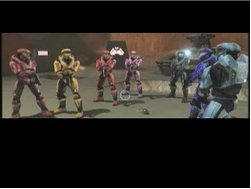
Machinima (pronounced [mə.ˈʃiː.nə.mə] or [mə.ˈʃɪ.nə.mə]), a portmanteau of machine cinema or machine animation, is both a collection of associated production techniques and a film genre defined by those techniques. As a production technique, the term concerns the rendering of computer-generated imagery (CGI) using real-time, interactive (game) 3D engines, as opposed to high-end and complex 3D animation software used by professionals. Engines from first person shooter and role-playing simulation video games are typically used. Consequently, the rendering can be done in real-time using PCs (either using the computer of the creator or the viewer), rather than with complex 3D engines using huge render farms. As a film genre, the term refers to movies created by the techniques described above.
Usually, machinima productions are produced using the tools (demo recording, camera angle, level editor, script editor, etc.) and resources (backgrounds, levels, characters, skins, etc.) available in a game. Although the topics are often based on male-oriented shooter scenarios, others have been made with romantic or dramatic topics as well.
Machinima is an example of emergent gameplay, a process of putting game tools to unexpected ends, and of artistic computer game modification. The real-time nature of machinima means that established techniques from traditional film-making can be reapplied in a virtual environment. As a result, production tends to be cheaper and more rapid than in keyframed CGI animation. It can also produce more professional appearing production than is possible with traditional at-home techniques of live video tape, or stop action using live actors, hand drawn animation or toy props.
Hacks
A hacker is often someone who likes to create and modify computer software or computer hardware, including computer programming, administration, and security-related items. A hacker is also someone who modifies electronics, for example, ham radio transceivers, printers or even home sprinkler systems to get extra functionality or performance. The term usually bears strong connotations, but may be either favorable or denigrating depending on cultural context
Video Mash Ups
The video mashup has come of age thanks to the likes of YouTube. This is where videos from multiple sources are edited together into a new video. To date, many of these video mashups have been parodies, but even music mashups are being integrated with them to make combined audio-visual mashups.
Mashup films can be broken down into several predominant styles and tropes. Most of the Mashups found on the internet fall into one category and more or less obey the unwritten rules of that class of film. These categories, are: word associated mashups, which like Danger Mouse’s “Grey Album” unite two disparate source materials by a pun or joke found in the name; transgressive mashups which transgress the sexual norms put forth in a film, often subverting hetero-normative portrayals; and overdubbing mashups, which use the images from a film and replaces the soundtrack with new dialogue or dialogue from another work, which undermines the original narrative
Audio Mash Ups
Mashup, or bootleg, is a musical genre which, in its purest form, consists of the combination (usually by digital means) of the music from one song with the a cappella from another. Typically, the music and vocals belong to completely different genres. At their best, bastard pop songs strive for musical epiphanies that add up to considerably more than the sum of their parts.
Nerd Sculpture
Nerd Sculpture is an emerging genre of Nerd Art where the artist utilizes common characters generally from video games, and creates soft sculptures of them. The sculptures generally utilize previously outdated methods of knitting, and cross-stitch to make new digital looking motifs which are not common to fabric or thread.
Nerd Painting
Nerd Paintings are paintings of classic video games, HTML code, television, and film. By painting these digital images a permanent replica of the original image is made. This negates the way one generally looks at digital media, and forces the viewer to confront the subject matter in a new and interesting light. If you haven’t noticed I make a lot of these paintings, and they are for sale too:)
Chip Music
Chiptune, or chip music, or micromusic is music written in sound formats where all the sounds are synthesized in realtime by a computer or video game console sound chip, instead of using sample-based synthesis. The "golden age" of chiptunes was the mid 1980s to early 1990s, when such sound chips were the most common method for creating music on computers. The restrictions the medium posed forced composers to become very creative when developing their own "electronic sounds". This is due to the early computer sound chips having only simple tone and noise generators imposing limitations on the complexity of the sound. The resultant chiptunes sometimes seem "harsh" or "squeaky" to the unaccustomed listener. Chiptunes are closely related to video game music. The term has also be recently applied to more recent compositions that attempt to recreate the chiptune sound, albeit with more complex technology.
Nerdcore Hip Hop
Nerdcore hip hop, or geeksta rap, is a subgenre of hip hop music that is performed by nerds or geeks, and is characterized by themes and subject matter considered to be of general interest to nerds. Self-described nerdcore musician MC Frontalot coined the term in 2000 in the song "Nerdcore Hiphop". Frontalot, like most nerdcore artists, self-publishes his work and has released much of it for free online. As a niche genre, nerdcore generally holds to the DIY ethic, and has a strong amateur tradition of self-publishing and self-production. The only things required to enter the nerdcore community are a microphone, a computer, and a webserver. No recognized nerdcore albums have ever been released on a major record label, and MP3s, not CDs, are the primary means of distribution
Science Fiction
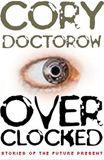
In the spirit of releasing works of art online for free. There are a handful of writers who release their entire books for download for free. This spits in the face of those who believe that downloading, and file sharing are hurting the major corporations that control them. Instead it has been shown to do just the opposite. Making works available for free on the internet expands readership, and creates a buzz around the book. Not to mention the fact that if an item is free, one will get tons of free links to your website. Cory Doctrow of Boingboing.net is the most well known science fiction writer who releases his work for absolutely nothing online.
Politics
There are many various political struggles which face the online community. One of the most popular was the issue of Net Neutrality. Basically the major telecommunications companies wanted to choke the internet, and privatize it, thus making much of it unavailable. Thankfully a grassroots surge of bloggers, and activists put an end to this but the issue has not yet gone away. Another issue which faces a lot of Nerd Artists are copyright issues since much of their work has been appropriated from mass media. I believe that if we have to watch it, or listen to it, we have the right to react to what we see or hear just as many other artists throughout the years have done.
Electronic Frontier Foundation
The Electronic Frontier Foundation (EFF) is a non-profit advocacy and legal organization based in the United States with the stated purpose of being dedicated to preserving free speech rights such as those protected by the First Amendment to the United States Constitution in the context of today's digital age. Its stated main goal is to educate the press, policymakers and the general public about civil liberties issues related to technology; and to act as a defender of those liberties. The EFF is a membership organization supported by donations and is based in San Francisco, California, with staff members in Toronto, Ontario and Washington, D.C
Robots
For many years now scientists have been making large moving robotic sculptures. While many would say that these objects are being designed for more practical purposes I would propose that many are being made just to be made. Robots for Robots sake. A perfect blend of aesthetics and science
Street Art
There are many different ways that nerd artists have taken their work directly to the streets. These can be anything from stickers, stencils, to led graffiti, to the laser graffiti which was breathtakingly created by the Graffiti Research Laboratories in the Netherlands. I love walking around Prague and seeing the new creative ways that nerdy street teams get their message out to the public in the most straightforward way possible.
Vintage Computers / Classic Video Games
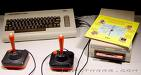
Many Nerd Artists have a general affinity for vintage computers and classic video games. This could be due to the fact that many who are now creating art around this subject matter grew up on these systems, and games. The first generation of gamers and computer users need to find ways to immortalize the digital era in traditional formats. Among the most popular are the Commodore 64 computer as well as Atari, and NES 8 bit games.
Ludology
Like most academic fields, those who study video games often have differing approaches. While scholars use many different theoretical and research frameworks, the two most visible approaches are ludology and narratology.
The term ludology arose within the context of non-electronic games and board games in particular, but gained popularity after it was featured in an article by Gonzalo Frasca in 1999.[1] The name, however, has not yet caught on fully. Major issues being grappled with in the field are questions of narrative and of simulation, and whether or not video games are either, neither, or both.
The narrativists approach video games in the context of what Janet Murray calls "Cyberdrama." That is to say, their major concern is with video games as a storytelling medium, one that arises out of interactive fiction. Murray puts video games in the context of the Holodeck, a fictional piece of technology from Star Trek, arguing for the video game as a medium in which we get to become another person, and to act out in another world.[2] This image of video games certainly recieved early widespread popular support, and forms the basis of films such as Tron, eXistenZ, and The Last Starfighter. But it is also criticized by many academics (such as Espen J. Aarseth) for being better suited to some linear science fiction movies than to analysis of interactive video games with multiple narratives.
Wheatpaste, or potato paste (also known as flour paste, rice paste or simply paste), is a liquid adhesive used since ancient times for various arts and crafts such as book binding, decoupage, collage, and papier-mâché. It is also made for the purpose of adhering paper posters to walls. Closely resembling wallpaper paste, it is made by mixing roughly equal portions of flour and water (some argue using more water or more flour), and heating it until it thickens.
A similar flour and water formula is taught in elementary school (minus the low heat simmer) as an easy to make substitute for ready made adhesive. A typical application is in constructing streamers of paper rings made from colored construction paper. It can also be used to create papier-mâché.
Activists and various subculture proponents (such as hip-hop, punk, communist, and anarchist) often use it to hang-up propaganda and artwork in urban areas — usually during the dead of night due to the illegality of postering other people's property, or near traffic zones in certain cities — although it is just as commonly used by commercial bill posters, and has been since at least the nineteenth century. In particular, it was widely used by nineteenth and twentieth century circus bill posters, who developed a substantial culture around paste manufacture and postering campaigns. In the field of alcohol and nightclub advertising, in the 1890s, Henri de Toulouse-Lautrec's posters were so popular that instructions were published on how to peel down the pasted posters without damage. Until the 1970s, commercial poster hangers always "cooked" their own paste, but since then many have bought pre-cooked instant pastes. It is applied to the backside of paper then placed on flat surfaces, particularly concrete and metal as it doesn't adhere well to wood or plastic. Cheap rough paper, such as newsprint, works well, as it can be briefly dipped in the mixture to saturate the fibres. Due to danger of being apprehended, wheatpasters frequently work in teams or affinity groups. This process is typically called wheat pasting or poster bombing.
Wheatpaste is also known as Marxist glue, probably because of the left organizations which use it; and because its ingredients are staples which can be combined by the individual, bypassing capital and industry — a true example of non-alienated labor.
It is also used in fine arts preparation and presentation due to its low acidity and reversibility.
Posterchild is the nom de plume of a street artist based in Toronto, Canada who is best known for his Mario Blocks project, the purpose of which is to install homemade Mario blocks in public spaces. After being featured on Boing Boing the project has expanded as others have made and hung their own blocks.
Currently Posterchild also runs his own website, called Posterchilds Blade Diary. The term comes from the fact that graffiti stencils are cut using a blade. According to the artist, "I'm not writing this diary with a pen -- I'm using a blade to make my mark." The website features new artwork every weekday, typically a stencil. Usually there is a description of the inspiration for the piece written in the style of a blog. The website also features a large collection of photos of Posterchild's work, including sticker art, poster art, and various other creative forms of street art. There are also tutorials on how to create various types of street art.
Recently, Some of Posterchild's artwork -- a series of stencils of a Betsy McCall paper doll and her dresses -- was featured on the front page of the fashion section of The Toronto Star; the artwork was unsigned, which is typical of street art.
Starting in November, 2006, a store was added to the Blade Diary. Merchandise featuring the artist's stencils including t-shirts and hoodies are available. Additionally, Posterchild has begun selling canvas paintings made from his stencils on ebay.
Ray Bradbury was born in Waukegan, Illinois, to a Swedish immigrant mother and a father who was a power and telephone lineman.[1] His paternal grandfather and great-grandfather were newspaper publishers. Bradbury was a reader and writer throughout his youth, spending much time in the Carnegie Library in Waukegan. His novels Dandelion Wine, Something Wicked This Way Comes, and Farewell Summer depict the town of Waukegan as "Green Town" and are semi-autobiographical. The Bradbury family lived in Tucson, Arizona, in 1926–27 and 1932–33 as his father pursued employment, each time returning to Waukegan, and eventually settled in Los Angeles in 1934, when Ray was thirteen. Bradbury graduated from Los Angeles High School in 1938 but chose not to attend college. Instead, he sold newspapers at the corner of South Norton Avenue and Olympic Boulevard. He continued to educate himself at the local library, and having been influenced by science fiction heroes like Flash Gordon and Buck Rogers, he began to publish science fiction stories in fanzines in 1938. His first paid piece was for the pulp magazine Super Science Stories in 1941, for which he earned $15.[2] He became a full-time writer by the end of 1942. His first book, Dark Carnival, a collection of short works, was published in 1947 by Arkham House. He married Marguerite McClure (1922–2003) in 1947, and they had four daughters.
A chance encounter in a Los Angeles bookstore with the British expatriate writer Christopher Isherwood gave Bradbury the opportunity to put The Martian Chronicles into the hands of a respected critic. Isherwood's glowing review followed and was a substantial boost to Bradbury's career.
The mechanical Hound slept but did not sleep, lived but did not live in its gently humming, gently vibrating, softly illuminated kennel back in a dark corner of the fire house. The dim light of one in the morning, the moonlight from the open sky framed through the great window, touched here and there on the brass and copper and the steel of the faintly trembling beast. Light flickered on bits of ruby glass and on sensitive capillary hairs in the nylon-brushed nostrils of the creature that quivered gently, its eight legs spidered under it on rubber padded paws.
Nights when things got dull, which was every night, the men slid down the brass poles, and set the ticking combinations of the olfactory system of the hound and let loose rats in the fire house areaway. Three seconds later the game was done, the rat caught half across the areaway, gripped in gentle paws while a four-inch hollow steel needle plunged down from the proboscis of the hound to inject massive jolts of morphine or procaine. From Fahrenheit 451, by Ray Bradbury
Having one of those annoying days at your computer? Well I swear this will cheer you up, and possibly put you into some sort of a meditative trance. The music loops is fantastic. Check the original on the site.
When we log onto the Internet, we take lots of things for granted. We assume that we'll be able to access whatever Web site we want, whenever we want to go there. We assume that we can use any feature we like -- watching online video, listening to podcasts, searching, emailing, and instant messaging -- anytime we choose. We assume that we can attach devices like wireless routers, game controllers, or extra hard drives to make our online experience better.
What makes all these assumptions possible is "Network Neutrality," the guiding principle that ensures the Internet remains free and unrestricted. Net Neutrality prevents the companies that control the wires bringing you the Internet from discriminating against content based on its ownership or source. But that could all change.
The biggest cable and telephone companies would like to charge money for smooth access to Web sites, speed to run applications, and permission to plug in devices. These network giants believe they should be able to charge Web site operators, application providers, and device manufacturers for the right to use the network. Those who don't make a deal and pay up will experience discrimination: Their sites won't load as quickly, their applications and devices won't work as well. Without legal protection, consumers could find that a network operator has blocked the Web site of a competitor, or slowed it down so much that it's unusable.
The network owners say they want a "tiered" Internet. If you pay to get in the top tier, your site and your service will run fast. If you don't, you'll be in the slow lane.
What's the problem here?
Discrimination: The Internet was designed as an open medium. The fundamental idea on the Internet since its inception is that every Web site, every feature, and every service should be treated exactly the same. That's how bloggers can compete with the CNN or USA Today for readers. That's how up-and-coming musicians can build underground audiences before they get their first top-40 single. That's why when you use a search engine, you see a hit list of the sites that are the closest match to your request -- not those who paid the most to reach you. Discrimination endangers our basic Internet freedoms.
Double-dipping: Traditionally, network owners have built a business model by charging consumers for access. Now they want to charge you for access to the network, and then charge you again for the things you do while you're online. They may not charge you directly via pay-per-view Web sites. But they will charge all the service providers you use -- who will pass those costs along to you in the form of price hikes or new charges to view content.
Stifling innovation: Net Neutrality ensures that innovators can start small and dream big about being the next EBay or Google without facing insurmountable hurdles. Unless we preserve Net Neutrality, startups and entrepreneurs will be muscled out of the marketplace by big corporations that pay for a top spot on the Web. On a tiered Internet controlled by the phone and cable companies, only their own content and services -- or those offered by corporate partners who pony up enough "protection money" -- will enjoy life in the fast lane.
The End of the Internet?
Make no mistake: The freewheeling Internet as we know it could very well become history.
What does that mean? It means we could be heading toward a pay-per-view Internet where Web sites have fees. It means we may have to pay a network tax to run voice-over-the-Internet phones, use an advanced search engine, or chat via Instant Messenger. The next generation of magical new inventions will be shut out of the top-tier service level. Meanwhile the network owners will rake in even greater profits. Sign the petition to protect Net Neutrality
The Ambiguous Panopticon: Foucault and the Codes of Cyberspace
by Mark Winokur
We cannot agree on an historical point of origin for the Internet. (Bletchley Park? The telegraph? The diorama? The abacus? The Atlantic Cable? Painting? Writing?) Its techniques and tools are still in the process of development, perhaps even in their infancy. Internet culture is heterogeneous and dynamic. Its economy is not stable, seeming sometimes as fantastic and illusory as the Internet itself. Its status as global tool or tool of globalization is still unclear. Most importantly, even the object of study, and so the appropriate methodologies for study, are unclear. Like other nascent forms of representation before it, the Internet in its infancy presents itself as -- and may actually be -- the site of cultural, political, and ideological contestation. Or it may not: the contest may in fact have ended before it began, in which case scholars interested in such things can, like Lawrence Lessig, write only about who won and who lost. The grandest claim one might plausibly make is that the Internet at the present moment is the material actualization of the post-structural indeterminacy that characterizes post-Nixon/Mao/Gandhi representation and cultural theory, from the post-1949 Middle East, to the films of Peter Greenaway, to deconstruction, to White Noise. However, it behooves the critic to find a sector of critical theory through which some of these assertions might be more clearly elaborated.
Pulling up one from the past. You old schoolers may remember the Hamster Dance phenomenon. Since then numerous other internet memes have come and gone. But the Hamster Dance lives on in the original geocities site archived here
The Hampster Dance [sic] or Hampsterdance is one of the earliest examples of an Internet meme, originally a simple Geocities page featuring rows of animated hamsters dancing in various ways to a sped-up sample from the song "Whistle Stop" by Roger Miller. Hamsterdance.com includes Hampton, Fuzzy, Hado, and Dixie as the singing Hamsters.
Canadian art student Deidre LaCarte, who was competing with her best friend and sister to see who could generate the most traffic, designed Hampsterdance in August 1998 as an homage to her pet hamster, named Hampton Hampster. Using four simple animated GIFs of hamsters, repeated dozens of times each, and a loop of background music embedded in the HTML, then a fairly new browser feature, she named the site Hampton's Hampster House and had Hampton declare his intent to become a "web star". The clip, "Whistle Stop", was taken from the opening credits to Walt Disney's 1973 animated version of Robin Hood and later the famous original HampsterDance 9-second loop WAV (dedodedo.wav) file was removed due to Disney copyright infringement. Until March 1999, only 800 visits were recorded (about 4 per day), but without warning, that jumped to 15,000 per day. The website spread by e-mail, early blogs, and bumper stickers, eventually even featured in a television commercial for Internet Service Provider Earthlink.
Fans of the site created variations on the original dance, using politicians such as Dan Quayle and Cynthia McKinney as well as household objects such as Pez dispensers.
Over at HipsterPlease.com is a nice wrap up of the events, and changes which happened to nerdcore hip hop throught 2006.
For better or worse, I came of age during the grunge era. It was a period of great cultural upheaval, a time when popular music in America was undergoing a transformation of sorts, and an era generally devoid of both fashion sense and self-awareness.
When I was 16, I watched Dave Markey’s seminal 1991: The Year Punk Broke at a house party. It was cool, getting to see all that tour footage of Sonic Youth and Nirvana, but the title bothered me. Even with the inclusion of old school punkers The Ramones, the film was hardly about punk rock, a movement that was birthed in earnest at approximately the same time as me. continue
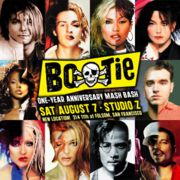
Mashup, or bootleg, is a musical genre which, in its purest form, consists of the combination of the music from one song with the a cappella from another. Typically, the music and vocals belong to completely different genres. At their best, bastard pop songs strive for musical epiphanies that add up to considerably more than the sum of their parts.
Best of Bootie is the most popular largest collection of audio mashups available on the net. Go to their website and download Best of Bootie for free. Link
A synthespian is any synthetic actor. A portmanteau of the words synthetic, meaning not of natural origin, and thespian, meaning dramatic actor. The dinosaurs in Jurassic Park, for instance, were animatronic synthespians created by Stan Winston Studios. Aki Ross from the movie Final Fantasy: The Spirits Within was an entirely computer-generated synthespian.
The term "synthespian" was created by Jeff Kleiser and Diana Walczak of Kleiser-Walczak Construction Company.[1] When they were assembling a synthetic thespian for their project, "Nestor Sextone for President", they coined the term "synthespian". Kleiser and Walczak have gone on to form Synthespian Studios (www.synthespians.net), dedicated to the creation of computer generated characters for entertainment and educational media.
Huge archive of free fun, and easy hacks for atari 2600 game console.
from their website.
"What is a Hack you might ask? In the realm of classic video games and the definition we're using here, a hack is taking an existing game and modifying it in some fashion so that it differs from the original. Almost always this involves just changing the graphics, which is pretty easily done in many games. Some changes are done to make a game more faithful to the original (Space Invaders and Pac-Man seem to get the most attention here), others are done to give a game a different theme entirely and still other hacks, well, we haven't got a clue. And then there are controller hacks that allow you to play games with a different control scheme, or perhaps even using a different controller entirely.
If you'd like to learn more about hacks and how you can hack Atari 2600 games yourself, please visit our Hacks Forum. If you've created a hack and would like it listed here, please feel free to drop us a line. We also have an entire page of 2600 TV Format Conversions."
Koji Kondo (近藤 浩治, Kondō Kōji?, b. August 13, 1960) is a Japanese composer and musician best known for his scores for various video games produced by Nintendo.
Kondo was born in Nagoya, Japan. He took to music at an early age, writing simple tunes for fun even when young. At seventeen years of age, he decided to pursue music professionally[citation needed]. He undertook classical training, and he learned to play several instruments[citation needed].
In the 1980s, Kondo learned that a company called Nintendo was seeking musicians to compose music for its new video game system, the Famicom (Nintendo Entertainment System outside Japan). Kondo had never considered writing video game music before, but he decided to give the company a chance. He was hired in 1983.
Kondo found himself in a totally different environment at Nintendo. Suddenly, he was limited to only four "instruments" (two monophonic pulse channels, a monophonic triangle wave channel which could be used as a bass, and a noise channel used for percussion) due to limitations of the system's sound chip. Though he and Nintendo's technicians eventually discovered a way to add a fifth channel (normally reserved for sound effects), his music was still severely limited on the system.
Kondo has stayed with Nintendo through various consoles, including the Super Famicom (Super Nintendo outside Japan), the Nintendo 64, the Nintendo GameCube, the Nintendo DS and most recently the Wii. These latter systems have vastly improved Nintendo's audio capabilities, and Kondo today composes music with CD quality sound.
Koji Kondo attended the world-premiere of PLAY! A Video Game Symphony at the Rosemont Theater in Rosemont, Illinois in May of 2006. His music from the Super Mario Bros. and The Legend of Zelda series was performed by a full symphony orchestra. This event drew nearly four thousand attendees.
The ILL Clan is a machinima production team based in Brooklyn, New York City. The clan has produced a number of machinima shorts, as well as several live performances at film festivals, often interacting with the audience. Their work often makes heavy use of improvised dialogue. The team has featured in numerous articles in various media (mainly print. Perhaps their best known works are the films featuring their characters Lenny and Larry Lumberjack. More recently they have been commissioned to do short works for cable television channels, such as MTV2 and Spike TV. Their latest production is a series called Trash Talk with ILL Will.
The current members of the ILL Clan have recently joined the Electric Sheep Company, the world's largest builder of virtual worlds, serving as their machinima division recording mostly in the virtual world of Second Life. Since joining ESC, the ILL Clan has produced a television promo for CBS' "Two and a Half Men" which appeared on CBS during the Super Bowl XLI pre-game show. The company will retain their brand and IP, and continue producing original content including bringing their machinima talk-show, Tra5hTa1k to Second Life.
Lolling, a compound of lol and a word (generally a noun), are photos with humorous captions. They are a type of image macro, and are thus also referred to as cat macros. Lol_______ are created for the purpose of sharing them with others on imageboards (particularly 4chan) and other internet forums, especially on Saturdays ("Caturdays").
Lol______ images consist of a photo with a caption characteristically formatted in a sans serif font such as Impact or Arial Black. The image is, on occasion, photoshopped for effect. The caption generally acts as a speech balloon encompassing a comment, or is a simple description of the depicted scene. The caption is intentionally written with deviations from standard English spelling and syntax featuring "strangely-conjugated verbs, but [a tendency] to converge to a new set of rules in spelling and grammar." These altered rules of English have been referred to as a type of pidgin or baby talk. The text is frequently in the form of a snowclone parodying the grammar-poor slang stereotypically attributed to users of the America Online service.
Lol_____ are similar to other animal-based image macros, such as the O RLY? owl and captioned pictures of walruses (lolruses), elephant seals, dogs, hamsters, birds, and rabbits. Various deviations of Lol______ have appeared as well, such as Rofl_____. The format is popular enough to have spread to United States Presidents, spawning sites such as LOLPresidents.com and loltapirs.com.
While lolcat language is very difficult to place absolute rules on, some language patterns seem to be constant:
* "Have" becomes "has" * Any soft U becomes "oo" * "O"s can be changed to Zeros * "You" becomes "U" * "Are" becomes "R" or "Be" or "Is" * Words that are or could be abbreviated in some circumstances become one misspelled word. ("We are" is changed to "We is" then finally becomes "Weez")
Lolcat language is largely based on phonetically spelling words as incorrectly as possible while leaving them readable
Papercraft is so cool. Download the plans for this millenium falcon and make it as a weekend project. The site is in Japanese, but the downloadable plans are great, and better yet, FREE! Link
Northwest Nerdcore was founded in December 2006 by Nerdcore Hip Hop Artists MC Tanuki & TG_2005.
Our Mission is to promote Nerdcore artists from or in the Pacific Northwest through our podcast, shows, and evil things we dare not speak of, lest a genetically modified monkey try to kidnap our children as payment for unsaid evil deeds.
We have, since inception, managed to hold at least one show a month, with a goal of one show a week. Also covered by us have been shows by Optimus Rhyme, Beefy, The Goondocks, and even MC Frontalot. Harnessing the power of the internet we have managed to offer nerdcore related content when we arent bookin/promoting/performing shows.
Feel free to contact us by leaving a comment with your name and email address, or hit us up on myspace.
Umm, why are you still reading this.
Oh, contact us via our myspace: http://www.myspace.com/nwnerdcore/
You good now? NO CANOLA OIL FOR YOU, now leave me be. I have class in 5 hours. Link to Podcast
A live action role-playing game (LARP or LRP) is a form of role-playing game where the participants perform some or all of the physical actions of the characters they are playing within a pre-determined space for a pre-determined span of time. LARP may be considered a form of improvisational theatre.
The two most common ways of simulating combat in LARP are through either physical representation or symbolic determination. Physical combat occurs without interruption in role-play, using "boffer" or latex representations of edged weapons, airsoft or laser tag guns, and similar. A variety of physical combat uses relatively harmless versions of real weapons (blunt steel swords, firearms loaded with blanks) rather than representations. Games using physical combat are often known as "Boffer" or "Live Combat" LARPs.
Symbolic determination relies on players momentarily suspending role-playing in order to determine the outcome of combat, for example by rolling dice, playing rock-paper-scissors or comparing character attributes. In symbolic combat systems, weapons may be represented as cards or inaccurate replicas. A "no-touch" rule, prohibiting physical contact between players, is often enforced. LARPs which feature symbolic combat may be known as free-form role-playing games or theatre-style games.
All symbolic combat systems, and most physical combat systems, use game rules governing attributes such as character strength, fighting skills and ability to endure physical pain in order to determine the outcome of a combat situation. An exception is honour system LARPs, where players are trusted to determine the outcomes of combat through free improvisation.
Physical representation is most common in, but not exclusive to, LARP styles where combat is seen as central to game-play. Conversely, symbolic determination and honour system LARPs tend to place less emphasis on combat.
Combat resolution is usually indicative of the design philosophy behind a specific LARP system. The same approaches as are taken to combat will often be used for other elements of LARP simulation such as magic, political power, character sexuality, scenery and propping. For this reason, combat resolution is the most widely used criterion for distinguishing between LARP styles.
Some LARP games involve heavy combat with boffers. Although some games have a "No-touch" policy, some other games are wildly violent in terms of weapons combat. Players of these LARP games must learn the old styles of combat in order to stand a chance in the "real" combat they intend to engage in. Practicing is often encouraged when engaging in these games due to the fact that if you don't practice, you will be beaten fairly regularly. This aspect draws many people to combat intensive LARP games because the idea of taking on a persona that is well versed in the art of sword fighting is very attractive. Link
The following table is taken from Simians, Cyborgs and Women and illustrates various facets of society, concrete and abstract, that Haraway believes will eventually change. The left column lists the old components of hierarchical dominance; the right column lists the alternatives that will be supplied by a network of equally-valued individuals.
Representation vs. Simulation.. Bourgeois novel, realism vs. Science fiction, postmodernism... Organism vs. Biotic component.... Depth, integrity vs Surface, boundary.... Heat vs. Noise.... Biology as clinical practice vs. Biology as inscription.... Physiology vs. Communications engineering.... Small group vs. Subsystem.... Perfection vs. Optimization.... Eugenics vs. Population control.... Decadence, Magic Mountain vs. Obsolescence, Future Shock.... Hygiene vs. Stress Management.... Microbiology, tuberculosis vs. Immunology, AIDS.... Organic division of labour vs. Ergonomics/cybernetics of labour.... Functional specialization vs. Modular construction.... Reproduction vs. Replication.... Organic sex role specialization vs. Optimal genetic strategies.... Biological determinism vs. Evolutionary inertia, constraints.... Community ecology vs. Ecosystem.... Racial chain of being vs. Neo-imperialism, United Nations humanism.... Scientific management in home vs. Global factory / electronic cottage.... /factory Home / market / factory vs. Women in the Integrated Circuit.... Family wage vs. Comparable worth.... Public / Private vs. Cyborg citizenship.... Nature / Culture vs. Fields of difference.... Co-operation vs. Communications enhancement.... Freud vs. Lacan.... Sex vs. Genetic engineering.... Labour vs. Robotics.... Mind vs. Artificial Intelligence.... Second World War vs. Star Wars.... White Capitalist Patriarchy vs. Informatics of Domination....
Last year, MAKE magazine approached MakingThings to create the MAKE Controller Kit, a next-generation family of modular, programmable controller boards. We were delighted, and we’re even more delighted to announce that the kit is now available.
Since 1998, MakingThings has been producing and selling a range of controller boards to an even wider range of customers. Before our partnership with MAKE, we had been thinking about how to take advantage of the latest 32-bit microcontrollers. Once we got the go-ahead, we immediately began making laundry lists of desirable features, and collecting suggestions from people using existing products.
We are very pleased with the way the MAKE Controller Kit has turned out. It is an absolute delight to program, and connecting real devices to it is very simple. For the future we look forward to programming more and more functionality into the platform, and seeing what others think of to do with it. Further, we hope the kit attracts a whole new audience to microcontroller programming, and to an overall greater understanding of electronics and engineering. via makezine Link to buy
A re-cut trailer, or retrailer is a parody trailer for a movie created by editing footage from that movie or from its original trailers, and thus are a form of mashup. They generally derive humor from misrepresenting the original film: for instance, a film with a murderous plot is made to look like a comedy, or vice versa. They became popular on the Internet in 2005.
In Greek mythology, Tálos (Greek Τάλων; Lat. Talus) was a bronze automaton whom Zeus gave to Europa. In one telling he was forged by Hephaestus and the Cyclopes and given to Minos. According to Apollodorus and Argonautica he may have been a member of the Bronze Generation who had survived to the age of the demigods. Europa took him to Crete and he stayed there, circling the island's shore three times daily while guarding it. He threw rocks at any approaching ship. Talos is said to have heated himself red-hot and clasped strangers in his embrace as soon as they landed on the island.
Talos had one vein which went from his neck to his ankle, bound shut by only one bronze nail. The Argo, containing Jason and the Argonauts, approached Crete after obtaining the Golden Fleece. As guardian of the island, Talos kept the Argo at bay by hurling great boulders at it. According to Apollodorus, Talos was slain either when Medea the sorceress drove him mad with drugs, deceived him that she would make him mortal by removing the nail, or was killed by Poeas's arrow (Apollodorus 1.140). In Argonautica, Medea hypnotizes him from the Argo, driving him mad so that he dislodges the nail and dies (Argonautica 4.1638). In any case, when the nail is removed, Talos's ichor flows out, exsanguinating and killing him. The story is somewhat reminiscent of the story regarding the heel of Achilles.
The Last Starfighter is a 1984 science fiction adventure film. There was a subsequent novelization of the movie that year by Alan Dean Foster, as well as a video game based on the production. In 2004, it was also adapted as an off-Broadway musical. The movie was directed by Nick Castle and was marketed with the tagline “He didn’t find his dreams… his dreams found him.”
The film made early use of extensive computer graphics to depict real objects in place of physical models.
The Last Starfighter was the last film role of character actor Robert Preston before his death. The character of “Centauri” was a “lovable-con-man” nod to his most famous role as Professor Harold Hill in The Music Man.
The film’s premise was based on the well-known urban myth that video arcade games were in fact military recruitment tests for fighters.
The Last Starfighter represents the narratavist approach to video game studies. The narrativists approach video games in the context of what Janet Murray calls "Cyberdrama." That is to say, their major concern is with video games as a storytelling medium, one that arises out of interactive fiction. Murray puts video games in the context of the Holodeck, a fictional piece of technology from Star Trek, arguing for the video game as a medium in which we get to become another person, and to act out in another world. This image of video games certainly received early widespread popular support, and forms the basis of films such as Tron, eXistenZ, and The Last Starfighter. But it is also criticized by many academics (such as Espen J. Aarseth) for being better suited to some linear science fiction movies than to analysis of interactive video games with multiple narratives.
It dosn't get much nerdarty than this. Play Pac man through the fantastic passages created by Mondrian!
"Pac-Mondrian closes the perceptual distance between fine art and video games by combining Piet Mondrian's Modernist masterpiece 'Broadway Boogie Woogie' with Toru Iwatani's classic video game Pac-Man. The two new Ms. Pac-Mondrian levels return the painting to the dance clubs that inspired it with music by contemporary techno musicians mapping the birth of electronic music in their home towns.
When Piet Mondrian arrived in New York in 1940, he heard the Boogie Woogie piano of Meade Lux Lewis, Albert Ammons, and Pete Johnson, and from then on refused to dance to any other jazz, leaving the floor in a huff if the music didn't boogie.
After years of completely abstract work he abandoned the black grid to use yellow lines and red, blue, and grey colour blocks to build a representation of New York infused with all the vibrant kinetic energy of raucous road-house piano blues in 'Broadway Boogie Woogie'.
Pac-Mondrian transcodes 'Broadway Boogie Woogie' into a Pac-Man video game: the painting becomes the board, the music becomes the sound effects, and Piet Mondrian becomes Pac-Man.
Pac-Mondrian disciplines the syncopated rhythms of Mondrian's spatial arrangements into a regular grid, then frees the gaze to follow the viewer's whimsical perambulations of the painting: a player's thorough study of the painting clears the level.
Each play of the game is an act of devotion. Mondrian's geometric spirituality fuses with his ecstatic physicality when Pac-Mondrian dances around the screen while the Trinity of Boogie Woogie jazz play 'Boogie Woogie Prayer'.
Each play of the game is an improvisational jazz session. Pac-Mondrian sits in as a session drummer with Ammons, Lewis, and Johnson, hitting hi-hats, cymbals, and snares as he eats pellets." via link
And a little background on Mondrian before you start playing:)
Pieter Cornelis (Piet) Mondriaan, after 1912 Mondrian, (pronounced: Pete Mon-dree-on, IPA: [pit 'mɔndɹiɔn]) (b. Amersfoort, Netherlands, March 7, 1872 — d. New York City, February 1, 1944) was a Dutch painter.
He was an important contributor to the De Stijl art movement and group, which was founded by Theo van Doesburg. Despite being well-known, often-parodied and even trivialized, Mondriaan's paintings exhibit a complexity that belies their apparent simplicity. He is best known for his non-representational paintings that he called "compositions", consisting of rectangular forms of red, yellow, blue, white or black, separated by black rectilinear lines. They are the result of a stylistic evolution that occurred over the course of nearly 30 years and continued beyond that point to the end of his life.
A Musikalisches Würfelspiel (Musical dice game) was a system for using dice to randomly 'generate' music (long before computer systems). These games were quite popular throughout Western Europe in the 18th century. Several different games were devised, some that did not require dice, but merely 'choosing a random number.' Other famous examples are Johann Philipp Kirnberger's The Ever Ready Composer of Polonaises and Minuets (1757 1st edition; revised 2nd 1783) and Joseph Haydn's Philharmonic Joke (1790).
The Musikalisches Würfelspiel has since been modified to fit the computer age, and many modern versions have been made.
An Introduction to Systems Theory While many view Systems theory, in its broadest sense, as the interdisciplinary study of human life and social organization in terms of systems, in reality, it is the fundamental framework by which one can analyze, describe and predict the behavior of any group of "objects" that work in concert, to produce a result. This could be a single organism, any organization or society, or any electro-mechanical, or informational artifact.
Systems theory as an area of study developed following the World Wars from the work of Ludwig von Bertalanffy, Anatol Rapoport, Kenneth E. Boulding, William Ross Ashby, Margaret Mead, Gregory Bateson, C. West Churchman and others in the 1950s, specifically catalyst from the Macy conferences. Cognizant of advances in science that questioned classical assumptions in the organizational sciences, Bertalanffy's idea to develop a theory of systems began as early as the interwar period, publishing "An Outline for General Systems Theory" in the British Journal for the Philosophy of Science, Vol 1, No. 2, by 1950. Where assumptions in Western science from Greek thought with Plato and Aristotle to Newton’s Principia have historically influenced all areas from the social to hard sciences, the original theorists explored the implications of twentieth century advances in terms of systems.
Systems theory as a technical and general academic area of study predominantly refers to the science of systems that resulted from Bertalanffy's General System Theory (GST) among the others mentioned in initiating what became a project of research and practice to develop systems theory. Ideas from systems theory have grown with diversified areas, exemplified by the the work of Bela H. Banathy, ecological systems with Howard T. Odum, Eugene P Odum and Fritjof Capra, organizational theory and management with individuals such as Peter Senge, interdisciplinary study with areas like Human Resource Development from the work of Richard A. Swanson, and insights from educators such as Debora Hammond. As a transdisciplinary, interdisciplinary and multiperspectival domain, the area brings together principles and concepts from ontology, philosophy of science, physics, computer science, biology, and engineering as well as geography, sociology, political science, psychotherapy (within family systems therapy) and economics among others. Systems theory, research and practice serve as a bridge for areas to engage in interdisciplinary dialogue and advance ideas for their own autonomous frames as well as within the area of systems science itself.
In this respect, with the possibility of misinterpretations, Bertalanffy (1950: 142) believed a general theory of systems “should be an important regulative device in science,” to guard against superficial analogies that “are useless in science and harmful in their practical consequences.” Others remain closer to the direct systems concepts developed by the original theorists. For example, Ilya Prigogine, of the Center for Complex Quantum Systems at the University of Texas, Austin, has studied emergent properties, suggesting that they offer analogues for living systems. The theories of Autopoiesis of Francisco Varela and Humberto Maturana are a further development in this field. Important names in contemporary systems science at the dusk of the Cold War include Russell Ackoff, Bela Banathy, Stanford Beer, Mandy Brown, Peter Checkland, Robert Flood, Fritjof Capra, Michael Jackson, and Werner Ulrich, among others. via Wikipedia
Add these fools. Not sure why they only have 87 friends currently. Check them, Add Them, Listen to them. Chip Tune at its finest coming straight outta Wroclaw Poland.
Jamendo just turned on a Creative Commons portal for browsing and searching albums by license (very similar to Flickr’s CC portal).
While Jamendo has always been a CC music site, the portal interface makes using Jamendo extra convenient when you care about which CC license the music you’re using falls under (e.g., for remix or commercial use).
If you just want to discover music you can share, Jamendo also recently rolled out The Spiral, a convenient and visually interesting way to explore the Jamendo catalog.
Just imagine if Jamendo keeps adding albums (now 2500+) and features at this torrid pace for the remaining 10 months of 2007…
By: Marc Perton Replicants, they call them. Created for offworld work. When one of them goes missing, they call me in. But this one's different. Created in the likeness of Philip K. Dick by Hanson Robotics. Vanished suddenly. Missing for weeks. No one knows what happened. But the story is that some museum called the Smithsonian wanted to put him in a box and display him around the country. Not something a replicant would want. I suspect this one has already found some like-minded supporters who will attempt to keep it offworld indefinitely. Too bad he won't live. But then again, who does? via engadget
While lolcat language is very difficult to place absolute rules on, some language patterns seem to be constant:
* "Have" becomes "has" * Any soft U becomes "oo" * "O"s can be changed to Zeros * "You" becomes "U" * "Your" becomes "Ur" * "Are" becomes "R" or "Be" or "Is" * "The" becomes "teh" * Words that are or could be abbreviated in some circumstances become one misspelled word. ("We are" is changed to "We is" then finally becomes "Weez")
Lolcat language is largely based on phonetically spelling words as incorrectly as possible while leaving them readable.