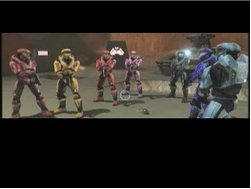
Machinima (pronounced [mə.ˈʃiː.nə.mə] or [mə.ˈʃɪ.nə.mə]), a portmanteau of machine cinema or machine animation, is both a collection of associated production techniques and a film genre defined by those techniques. As a production technique, the term concerns the rendering of computer-generated imagery (CGI) using real-time, interactive (game) 3D engines, as opposed to high-end and complex 3D animation software used by professionals. Engines from first person shooter and role-playing simulation video games are typically used. Consequently, the rendering can be done in real-time using PCs (either using the computer of the creator or the viewer), rather than with complex 3D engines using huge render farms. As a film genre, the term refers to movies created by the techniques described above.
Usually, machinima productions are produced using the tools (demo recording, camera angle, level editor, script editor, etc.) and resources (backgrounds, levels, characters, skins, etc.) available in a game. Although the topics are often based on male-oriented shooter scenarios, others have been made with romantic or dramatic topics as well.
Machinima is an example of emergent gameplay, a process of putting game tools to unexpected ends, and of artistic computer game modification. The real-time nature of machinima means that established techniques from traditional film-making can be reapplied in a virtual environment. As a result, production tends to be cheaper and more rapid than in keyframed CGI animation. It can also produce more professional appearing production than is possible with traditional at-home techniques of live video tape, or stop action using live actors, hand drawn animation or toy props.
Hacks
A hacker is often someone who likes to create and modify computer software or computer hardware, including computer programming, administration, and security-related items. A hacker is also someone who modifies electronics, for example, ham radio transceivers, printers or even home sprinkler systems to get extra functionality or performance. The term usually bears strong connotations, but may be either favorable or denigrating depending on cultural context
Video Mash Ups
The video mashup has come of age thanks to the likes of YouTube. This is where videos from multiple sources are edited together into a new video. To date, many of these video mashups have been parodies, but even music mashups are being integrated with them to make combined audio-visual mashups.
Mashup films can be broken down into several predominant styles and tropes. Most of the Mashups found on the internet fall into one category and more or less obey the unwritten rules of that class of film. These categories, are: word associated mashups, which like Danger Mouse’s “Grey Album” unite two disparate source materials by a pun or joke found in the name; transgressive mashups which transgress the sexual norms put forth in a film, often subverting hetero-normative portrayals; and overdubbing mashups, which use the images from a film and replaces the soundtrack with new dialogue or dialogue from another work, which undermines the original narrative
Audio Mash Ups
Mashup, or bootleg, is a musical genre which, in its purest form, consists of the combination (usually by digital means) of the music from one song with the a cappella from another. Typically, the music and vocals belong to completely different genres. At their best, bastard pop songs strive for musical epiphanies that add up to considerably more than the sum of their parts.
Nerd Sculpture
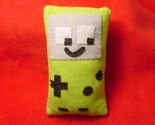
Nerd Sculpture is an emerging genre of Nerd Art where the artist utilizes common characters generally from video games, and creates soft sculptures of them. The sculptures generally utilize previously outdated methods of knitting, and cross-stitch to make new digital looking motifs which are not common to fabric or thread.
Nerd Painting
Nerd Paintings are paintings of classic video games, HTML code, television, and film. By painting these digital images a permanent replica of the original image is made. This negates the way one generally looks at digital media, and forces the viewer to confront the subject matter in a new and interesting light. If you haven’t noticed I make a lot of these paintings, and they are for sale too:)
Chip Music
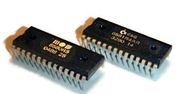
Chiptune, or chip music, or micromusic is music written in sound formats where all the sounds are synthesized in realtime by a computer or video game console sound chip, instead of using sample-based synthesis. The "golden age" of chiptunes was the mid 1980s to early 1990s, when such sound chips were the most common method for creating music on computers. The restrictions the medium posed forced composers to become very creative when developing their own "electronic sounds". This is due to the early computer sound chips having only simple tone and noise generators imposing limitations on the complexity of the sound. The resultant chiptunes sometimes seem "harsh" or "squeaky" to the unaccustomed listener. Chiptunes are closely related to video game music. The term has also be recently applied to more recent compositions that attempt to recreate the chiptune sound, albeit with more complex technology.
Nerdcore Hip Hop
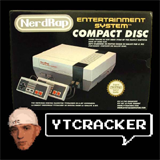
Nerdcore hip hop, or geeksta rap, is a subgenre of hip hop music that is performed by nerds or geeks, and is characterized by themes and subject matter considered to be of general interest to nerds. Self-described nerdcore musician MC Frontalot coined the term in 2000 in the song "Nerdcore Hiphop". Frontalot, like most nerdcore artists, self-publishes his work and has released much of it for free online. As a niche genre, nerdcore generally holds to the DIY ethic, and has a strong amateur tradition of self-publishing and self-production. The only things required to enter the nerdcore community are a microphone, a computer, and a webserver. No recognized nerdcore albums have ever been released on a major record label, and MP3s, not CDs, are the primary means of distribution
Science Fiction
In the spirit of releasing works of art online for free. There are a handful of writers who release their entire books for download for free. This spits in the face of those who believe that downloading, and file sharing are hurting the major corporations that control them. Instead it has been shown to do just the opposite. Making works available for free on the internet expands readership, and creates a buzz around the book. Not to mention the fact that if an item is free, one will get tons of free links to your website. Cory Doctrow of Boingboing.net is the most well known science fiction writer who releases his work for absolutely nothing online.
Politics
There are many various political struggles which face the online community. One of the most popular was the issue of Net Neutrality. Basically the major telecommunications companies wanted to choke the internet, and privatize it, thus making much of it unavailable. Thankfully a grassroots surge of bloggers, and activists put an end to this but the issue has not yet gone away. Another issue which faces a lot of Nerd Artists are copyright issues since much of their work has been appropriated from mass media. I believe that if we have to watch it, or listen to it, we have the right to react to what we see or hear just as many other artists throughout the years have done.
Electronic Frontier Foundation
The Electronic Frontier Foundation (EFF) is a non-profit advocacy and legal organization based in the United States with the stated purpose of being dedicated to preserving free speech rights such as those protected by the First Amendment to the United States Constitution in the context of today's digital age. Its stated main goal is to educate the press, policymakers and the general public about civil liberties issues related to technology; and to act as a defender of those liberties. The EFF is a membership organization supported by donations and is based in San Francisco, California, with staff members in Toronto, Ontario and Washington, D.C
Robots
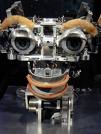
For many years now scientists have been making large moving robotic sculptures. While many would say that these objects are being designed for more practical purposes I would propose that many are being made just to be made. Robots for Robots sake. A perfect blend of aesthetics and science
Street Art
There are many different ways that nerd artists have taken their work directly to the streets. These can be anything from stickers, stencils, to led graffiti, to the laser graffiti which was breathtakingly created by the Graffiti Research Laboratories in the Netherlands. I love walking around Prague and seeing the new creative ways that nerdy street teams get their message out to the public in the most straightforward way possible.
Vintage Computers / Classic Video Games
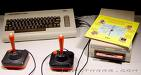
Many Nerd Artists have a general affinity for vintage computers and classic video games. This could be due to the fact that many who are now creating art around this subject matter grew up on these systems, and games. The first generation of gamers and computer users need to find ways to immortalize the digital era in traditional formats. Among the most popular are the Commodore 64 computer as well as Atari, and NES 8 bit games.
Ludology
Like most academic fields, those who study video games often have differing approaches. While scholars use many different theoretical and research frameworks, the two most visible approaches are ludology and narratology.
The term ludology arose within the context of non-electronic games and board games in particular, but gained popularity after it was featured in an article by Gonzalo Frasca in 1999.[1] The name, however, has not yet caught on fully. Major issues being grappled with in the field are questions of narrative and of simulation, and whether or not video games are either, neither, or both.
The narrativists approach video games in the context of what Janet Murray calls "Cyberdrama." That is to say, their major concern is with video games as a storytelling medium, one that arises out of interactive fiction. Murray puts video games in the context of the Holodeck, a fictional piece of technology from Star Trek, arguing for the video game as a medium in which we get to become another person, and to act out in another world.[2] This image of video games certainly recieved early widespread popular support, and forms the basis of films such as Tron, eXistenZ, and The Last Starfighter. But it is also criticized by many academics (such as Espen J. Aarseth) for being better suited to some linear science fiction movies than to analysis of interactive video games with multiple narratives.
He's 50 tons of space titanium in the shape of Godzilla! Need I say more? This monstrosity is the most weapon-equipped robot of all time with torpedo fingers, eye beams, a crazy 360-degree rotating head that creates a force field, and multiple guns in his toes, knees, shoulders and chest. And yet, Godzilla is somehow able to beat him by inexplicitly becoming a magnet (?!) Geek factor: The best part of the film comes when a Japanese scientist finds an odd metal found in a cave and says, "This material can only be space titanium." Of course! Best standard feature: Did I mention the 50 tons of space titanium?
In the future, two men visit an amusement park that allows them to actually live out their Wild West fantasy—and the period parts are played by robots. This means that vacationers can fight them, shoot them, and even kill them as part of "the experience." But then, the robots go mad (for no discernable reason) and begin killing the guests (hey, I want a rebate!). The most frightening of the rampaging robots is The Gunslinger, played coldly and forcibly by Yul Brynner, in a performance that set the groundwork for Arnold's terminator. Geek factor: It's Yul Brynner! Even better, it's Brynner spoofing his own character from The Magnificent Seven. Best standard feature: The slow saunter … that haunts you … with every step.
Originating on TV's The Next Generation, android Data mixed Spock-like logic with childlike innocence and intense curiosity about humanity. A Lieutenant Commander aboard Picard's Enterprise, Data made his movie mark with a dramatic character arc about what it means to be human in the last three Star Trek films. In the films, Data installs an emotions chip that allows him to feel (Generations), resists the temptation to become more human in exchange for selling out his crew (First Contact), and makes the ultimate sacrifice by giving his life for others (Nemesis). Geek factor: You gotta love any robot who has a pet cat. Best standard feature: Umm, maybe his jaundiced skin?
Killer robots are nothing new. Robots who like The Three Stooges? Now that's special. Robot Number Five is one of several advanced Nova Robotics military robots created to be the perfect soldiers. But when lightning hits him, he begins to ask questions, reject commands, and think abstractly. Number Five is alive! Calling himself Johnny-5, the robot learns what it really means to be human: to love and to be loved, to learn the wonder of life (like dancing) and the horror of death. Amazing that a robot that looks completely machine-like could, by film's end, feel so human. Geek factor: Why would Nova Robotics create a military weapon that looks so darn cute till it's time to kill (when its big black eyebrows cock at an angle like an angry grandpa). Best standard feature: That rockin' shoulder laser.
Seven feet tall and solid metal, Gort is the ultimate imposing robot thug. He arrives via UFO with galactic spaceman Klaatu, who has come to warn Earthlings to quell the violence that results from all their irrational fears. But before he can deliver the message, the Earthlings freak out and start shooting at him—which only proves his point. With that, Gort lays down the law and starts melting stuff with his eye laser. That said, it's not surprising why the rest of the galaxy lives in peace: Gort and friends. Klaatu explains: "For our policemen, we created a race of robots to patrol the planets in spaceships. At the first sign of violence, they react automatically against the aggressor." Gort is one bad dude. Menacing, featureless, and silent, he is the ultimate frightening, unstoppable robot. Geek factor: "Klaatu barada nikto." Best standard feature: The eye beam … but really, the dude is so tough he doesn't even need it.
The perfect manifestation of the 1950s dream of what robots could be, Robby is a cook, chauffeur, translator, fork lift, security guard—and loyal friend. He's a polite, fully functional home machine—with a bulky form built completely out of '50s technology and electronics. Because of that, he feels like he could be a reality—an illusion helped by his visible circuitry and mechanical features that make it seem like he's literally working in front of you. Plus he tells jokes. Robby ultimately shows us that technology can equally aid good—or evil. Geek factor: When asked to commit violence, Roby's circuits overheat, which is depicted by his head just turning pink. Best standard feature: He can replicate any product, such as the 60 gallons of bourbon he makes for one Earth solider.
Easily the greatest animated robot, The Iron Giant is a space visitor who befriends a young boy, Hogarth, in the 1950s. But even though Giant is extremely human (his stomach even growls when hungry), he turns into a deadly weapon when threatened—a trait the film handles almost like a sinful urge the robot fights to suppress. When Hogarth shows the robot comic books, they agree that Giant can be Superman and not Atomo, a killer machine. Says Hogarth, "It's bad to kill. Guns kill. You don't have to be a gun. You are what you choose." In the end, Giant chooses to be Superman and sacrifices himself for others. This scene will make you tear up, but the final scene—which furthers the Giant's comparison to Christ—will make you bawl. Geek factor: In one of the best voice-casting selections ever, Vin Diesel plays the Iron Giant. Best standard feature: The Giant's kick-butt, full-out battle mode, complete with giant energy cannon, War of the Worlds-like serpent heads, and at least 5 more imaginative weapons.
The Arnold Schwarzenegger terminator (a T-800) is one of the most cold, calculating and unstoppable machines ever—at least until the creepily persistent liquid-metal T-1000 (Robert Patrick) shows up in T2. And so with the creation of a more terrifying terminator, what happens to Arnold's T-800? He becomes the hero—and one whose ultimate sacrifice makes grown men weep (okay, maybe just me). On a thematic level, the terminators use violence to preach against violence and ultimately show that even a creation made to do evil can be redeemed, taught to love, and realize the value of human life. Geek factor: The T-800 (Cyberdyne systems model no. 101) is living tissue over a super sweet hyper-alloy combat chassis. (Yes, I need to leave the house.) Best standard feature: The ability to find really cool leather clothes again and again.
The first major movie robot, German director Fritz Lang's Machine-Human was way before her time. While many film robots—from as recent as the '80s—now look silly and dated, the grandma of all film cyborgs still seems futuristic. In fact, her look isn't far from that of Star Wars' C-3PO—who didn't show up for 50 years! Her story is pure sci-fi geekiness: A mad scientist built her to stand in for his long-lost love and in an attempt for revenge, he uses a Frankenstein-like experiment to make the droid look like the local hero Maria. Lang's Machine-Human represents the power of technology to seduce and corrupt. In fact, the hazards of technology are compared to the building of the Tower of Babel: Both being attempts to reach God that result in more distance from him because of sinful human desires. Geek factor: Actress Brigitte Helm's portrayal of the fake Maria is geek bliss because it's just jerky movements and big eyes. Best standard feature: The ability to look like anyone "in less than 24 hours!"
For decades, most movie robots were just that: robotic—cold, speech-stilted, and subservient. But George Lucas (with much debt to the past) gave two odd, loyal, bickering droids actual personalities and created not only the world's most recognizable robots, but one of the most beloved duos in film. In fact, they are integral characters who not only add to, but push along, the plot; we see the Star Wars universe through their eyes. And more than any metal character before them, you care about them. I still remember my mental torture in The Empire Strikes Back (okay, I was 3) when C-3PO was blasted and R2-D2 was swallowed! That emotional connection is a surprising feat, considering one character emoted solely through shaking and beeping. But still, these inseparable droids are two of the most three-dimensional and defined characters in the Star Wars canon. Geek factor: Okay, Episode III had better explain why C-3PO doesn't realize he was built by Darth Vader! Best standard features: R2's little saw and C-3PO's ability to calculate the odds of anyone's demise.