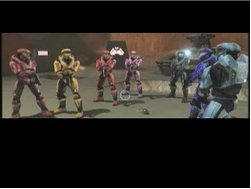
Machinima (pronounced [mə.ˈʃiː.nə.mə] or [mə.ˈʃɪ.nə.mə]), a portmanteau of machine cinema or machine animation, is both a collection of associated production techniques and a film genre defined by those techniques. As a production technique, the term concerns the rendering of computer-generated imagery (CGI) using real-time, interactive (game) 3D engines, as opposed to high-end and complex 3D animation software used by professionals. Engines from first person shooter and role-playing simulation video games are typically used. Consequently, the rendering can be done in real-time using PCs (either using the computer of the creator or the viewer), rather than with complex 3D engines using huge render farms. As a film genre, the term refers to movies created by the techniques described above.
Usually, machinima productions are produced using the tools (demo recording, camera angle, level editor, script editor, etc.) and resources (backgrounds, levels, characters, skins, etc.) available in a game. Although the topics are often based on male-oriented shooter scenarios, others have been made with romantic or dramatic topics as well.
Machinima is an example of emergent gameplay, a process of putting game tools to unexpected ends, and of artistic computer game modification. The real-time nature of machinima means that established techniques from traditional film-making can be reapplied in a virtual environment. As a result, production tends to be cheaper and more rapid than in keyframed CGI animation. It can also produce more professional appearing production than is possible with traditional at-home techniques of live video tape, or stop action using live actors, hand drawn animation or toy props.
Hacks
A hacker is often someone who likes to create and modify computer software or computer hardware, including computer programming, administration, and security-related items. A hacker is also someone who modifies electronics, for example, ham radio transceivers, printers or even home sprinkler systems to get extra functionality or performance. The term usually bears strong connotations, but may be either favorable or denigrating depending on cultural context
Video Mash Ups
The video mashup has come of age thanks to the likes of YouTube. This is where videos from multiple sources are edited together into a new video. To date, many of these video mashups have been parodies, but even music mashups are being integrated with them to make combined audio-visual mashups.
Mashup films can be broken down into several predominant styles and tropes. Most of the Mashups found on the internet fall into one category and more or less obey the unwritten rules of that class of film. These categories, are: word associated mashups, which like Danger Mouse’s “Grey Album” unite two disparate source materials by a pun or joke found in the name; transgressive mashups which transgress the sexual norms put forth in a film, often subverting hetero-normative portrayals; and overdubbing mashups, which use the images from a film and replaces the soundtrack with new dialogue or dialogue from another work, which undermines the original narrative
Audio Mash Ups
Mashup, or bootleg, is a musical genre which, in its purest form, consists of the combination (usually by digital means) of the music from one song with the a cappella from another. Typically, the music and vocals belong to completely different genres. At their best, bastard pop songs strive for musical epiphanies that add up to considerably more than the sum of their parts.
Nerd Sculpture
Nerd Sculpture is an emerging genre of Nerd Art where the artist utilizes common characters generally from video games, and creates soft sculptures of them. The sculptures generally utilize previously outdated methods of knitting, and cross-stitch to make new digital looking motifs which are not common to fabric or thread.
Nerd Painting
Nerd Paintings are paintings of classic video games, HTML code, television, and film. By painting these digital images a permanent replica of the original image is made. This negates the way one generally looks at digital media, and forces the viewer to confront the subject matter in a new and interesting light. If you haven’t noticed I make a lot of these paintings, and they are for sale too:)
Chip Music
Chiptune, or chip music, or micromusic is music written in sound formats where all the sounds are synthesized in realtime by a computer or video game console sound chip, instead of using sample-based synthesis. The "golden age" of chiptunes was the mid 1980s to early 1990s, when such sound chips were the most common method for creating music on computers. The restrictions the medium posed forced composers to become very creative when developing their own "electronic sounds". This is due to the early computer sound chips having only simple tone and noise generators imposing limitations on the complexity of the sound. The resultant chiptunes sometimes seem "harsh" or "squeaky" to the unaccustomed listener. Chiptunes are closely related to video game music. The term has also be recently applied to more recent compositions that attempt to recreate the chiptune sound, albeit with more complex technology.
Nerdcore Hip Hop
Nerdcore hip hop, or geeksta rap, is a subgenre of hip hop music that is performed by nerds or geeks, and is characterized by themes and subject matter considered to be of general interest to nerds. Self-described nerdcore musician MC Frontalot coined the term in 2000 in the song "Nerdcore Hiphop". Frontalot, like most nerdcore artists, self-publishes his work and has released much of it for free online. As a niche genre, nerdcore generally holds to the DIY ethic, and has a strong amateur tradition of self-publishing and self-production. The only things required to enter the nerdcore community are a microphone, a computer, and a webserver. No recognized nerdcore albums have ever been released on a major record label, and MP3s, not CDs, are the primary means of distribution
Science Fiction
In the spirit of releasing works of art online for free. There are a handful of writers who release their entire books for download for free. This spits in the face of those who believe that downloading, and file sharing are hurting the major corporations that control them. Instead it has been shown to do just the opposite. Making works available for free on the internet expands readership, and creates a buzz around the book. Not to mention the fact that if an item is free, one will get tons of free links to your website. Cory Doctrow of Boingboing.net is the most well known science fiction writer who releases his work for absolutely nothing online.
Politics
There are many various political struggles which face the online community. One of the most popular was the issue of Net Neutrality. Basically the major telecommunications companies wanted to choke the internet, and privatize it, thus making much of it unavailable. Thankfully a grassroots surge of bloggers, and activists put an end to this but the issue has not yet gone away. Another issue which faces a lot of Nerd Artists are copyright issues since much of their work has been appropriated from mass media. I believe that if we have to watch it, or listen to it, we have the right to react to what we see or hear just as many other artists throughout the years have done.
Electronic Frontier Foundation
The Electronic Frontier Foundation (EFF) is a non-profit advocacy and legal organization based in the United States with the stated purpose of being dedicated to preserving free speech rights such as those protected by the First Amendment to the United States Constitution in the context of today's digital age. Its stated main goal is to educate the press, policymakers and the general public about civil liberties issues related to technology; and to act as a defender of those liberties. The EFF is a membership organization supported by donations and is based in San Francisco, California, with staff members in Toronto, Ontario and Washington, D.C
Robots
For many years now scientists have been making large moving robotic sculptures. While many would say that these objects are being designed for more practical purposes I would propose that many are being made just to be made. Robots for Robots sake. A perfect blend of aesthetics and science
Street Art
There are many different ways that nerd artists have taken their work directly to the streets. These can be anything from stickers, stencils, to led graffiti, to the laser graffiti which was breathtakingly created by the Graffiti Research Laboratories in the Netherlands. I love walking around Prague and seeing the new creative ways that nerdy street teams get their message out to the public in the most straightforward way possible.
Vintage Computers / Classic Video Games
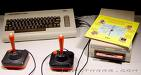
Many Nerd Artists have a general affinity for vintage computers and classic video games. This could be due to the fact that many who are now creating art around this subject matter grew up on these systems, and games. The first generation of gamers and computer users need to find ways to immortalize the digital era in traditional formats. Among the most popular are the Commodore 64 computer as well as Atari, and NES 8 bit games.
Ludology
Like most academic fields, those who study video games often have differing approaches. While scholars use many different theoretical and research frameworks, the two most visible approaches are ludology and narratology.
The term ludology arose within the context of non-electronic games and board games in particular, but gained popularity after it was featured in an article by Gonzalo Frasca in 1999.[1] The name, however, has not yet caught on fully. Major issues being grappled with in the field are questions of narrative and of simulation, and whether or not video games are either, neither, or both.
The narrativists approach video games in the context of what Janet Murray calls "Cyberdrama." That is to say, their major concern is with video games as a storytelling medium, one that arises out of interactive fiction. Murray puts video games in the context of the Holodeck, a fictional piece of technology from Star Trek, arguing for the video game as a medium in which we get to become another person, and to act out in another world.[2] This image of video games certainly recieved early widespread popular support, and forms the basis of films such as Tron, eXistenZ, and The Last Starfighter. But it is also criticized by many academics (such as Espen J. Aarseth) for being better suited to some linear science fiction movies than to analysis of interactive video games with multiple narratives.
MR t1 is a project that constantly checks the current speed of the connected network and if it reaches that of a standard T1 line (1.5mbit/sec) or higher then a Mr.T sound sample is triggered in the form of 'I Pity The Fool' or one of Mr.T's other various sayings. The project playfully examines the metaphorical connection between fictional characters from mainstream entertainment media and the naming conventions of modern communication systems such as the Internet. It also stems from the experience of working in many different lab environments where bandwidth speed has always been an issue concerning people using shared Internet resources.
Have trouble finding a use for those old motherboards around? Well, here's an easy way to turn them into a work of art. By burying the motherboard for a few months it will get this weathered look, then you can mount it, and boom you have what appears to be an ancient kingdom.
Fuck Yuo I am a robot releases entire album online for free
Fuck Yuo I am a Robot is an Estonian band which has recently released their entire album for free. That's right, every mp3 is available for download. For free. Electro Beats, and robotic swaths of color follow.
The Telegarden is a system that allows a living garden tended by a robot manipulator to be operated via anyone on the WWW with a desktop (or laptop!) computer and modem. We had three major objectives in constructing it.
1 To integrate natural, organic elements with robots, so that some parts were fixed and others would grow, change and decay; 2 To create a work of art in the interplay of natural beauty and technology, and 3 As an experiment in electronic community where web surfers can gather and interact amongst themselves and with a real environment.
McLeod Mirror Series 1: See Yourself in Others are not actually made of mirrored glass, but an LCD screen housed in a wooden case with a web cam attached to the top. The camera records the viewer and creates a collage of the person’s image along with images of everyone else who has stood before the mirror. The image allows the viewer to “see themselves reflected in others” in a new way. The mirrors bring a timeless bathroom product into the digital age, creating a twist on the staple that is more interesting and dynamic than the original, while perhaps pointlessly complex. The images are not recorded or archived, so the digital artwork created on the spot will never be seen again. Link
Transhumanists advocate the improvement of human capacities through advanced technology. Not just technology as in gadgets you get from Best Buy, but technology in the grander sense of strategies for eliminating disease, providing cheap but high-quality products to the world’s poorest, improving quality of life and social interconnectedness, and so on. Technology we don’t notice because it’s blended in with the fabric of the world, but would immediately take note of its absence if it became unavailable. (Ever tried to travel to another country on foot?) Technology needn’t be expensive - indeed, if a technology is truly effective it will pay for itself many times over.
Transhumanists tend to take a longer-than-average view of technological progress, looking not just five or ten years into the future but twenty years, thirty years, and beyond. We realize that the longer you look forward, the more uncertain the predictions get, but one thing is quite certain: if a technology is physically possible and obviously useful, human (or transhuman!) ingenuity will see to it that it gets built eventually. As we gain ever greater control over the atomic structure of matter, our technological goals become increasingly ambitious, and their payoffs more and more generous. Sometimes new technologies even make us happier in a long-lasting way: the Internet would be a prime example. In the following list I take a look at what I consider the top ten transhumanist technologies.
DJ Spooky: How a Tiny Caribbean Island Birthed the Mashup
Paul D. Miller, also known as DJ Spooky, That Subliminal Kid, has been producing beat-heavy electronic music for more than a decade. From his early solo trip-hop efforts to his more recent collaborations with jazz giants, Spooky has always approached music from multiple angles at once. He has the chops of a musician, the genre-blending ear of a disc jockey and the conceptual vision of a performance artist.
It was therefore no surprise when Trojan Records, a reggae label entering its 40th year, asked DJ Spooky to put together a mix showcasing tracks from its massive archives. When assembling >In Fine Style: DJ Spooky Presents 50,000 Volts of Trojan Records, one of several mixes commissioned to mark the Trojan birthday, Miller found countless parallels between the Jamaican reggae scene of the 1960s and '70s and the digital mashup ecosystem of today. (See Upgrading Jamaica's Cultural Shareware: Trojan Records at 40.)
A McDonalds youtube video has recently got some mainstream media attention (which has potentially made it 100 of times more valuable). The video shows two suburbanites beatboxing and rapping into a McDonalds drive through window. The video currently has just under 8 million views on YouTube. So my question is this, how much is this video worth (if a marketing company were simply to pay for results based upon views) and what does it mean that over 8 million people chose to watch this advertisement (many not knowing they were even seeing an ad which is always more expensive in itself). Places like YouTube, Facebook, MySpace, and the rest of the web 2.0 places are ripe for the taking, yet most major media hasn't caught on to the idea of internet marketing. It will be interesting to see what YouTube looks like in five years. I imagine it will look something like PornoTube where top spots, links, and everything else is paid for. And most people won't care because, well, shit, it's obvious they don't mind watching commercials anyway.
NPR has a great short segment available online about video game addiction.
America has become obsessed with labeling and classifying all human characteristics. It is no surprise that with the rise of the gaming culture along comes bullshit organizations like the American Psychiatric Association who wish to immediately classify anything they don't fully understand as an addiction. Don't get me wrong, there are some gamers who may game to the point that it effects their jobs, or social life, however one needs to approach the subject of video game addiction from a viewpoint of a new social phenomenon. World of Warcraft tends to get the most flack, because players may game for hours and hours on end, however this is also due to the fact that World of Warcraft is also a social atmosphere where one can socialize with other characters. I think as these older doctors talk about digital/virtual experiences they forget that these things are just babies. One wouldn't chastise a person obsessed with other hobbies which are repetitive and somewhat obsessive as well as rewarding. Take playing the piano for instance. A pianist sits at a chair and uses his fingers (and feet) in order to create music. Concert pianists practice hours and hours a day for years on end, most started playing when they were very young. Now, gamers obviously don't "give back" as much to the community, but there are cultures where gamers are becoming as popular as Sports players. Ironically the NPR segment below is followed by a story about an umpire who's been calling baseball for 37 years. Another example of a generation completely out of touch with the 21st century, and more evidence that there needs to be more scholars researching virtual environments so they don't get labeled and pigeon holed by some hack who writes the DSMIV.
Addiction is most often associated with alcohol, drugs and cigarettes — but what about compulsive eating, gambling, or video gaming? According to the American Psychiatric Association, compulsive gambling meets the criteria for addiction, but compulsive video gaming does not. Link (Via NPR)
Michael D. Lemonick's is a guest during this segment and has recently written "How We Get Addicted" for Time magazine. Link
As some of you may know. I'm writing from the Czech Republic. Which is consistently the winner of "the most Atheist country in the world award" I found this map the other day, and thought it was an interesting look at the "belief quotient" which can be found throuhgout Europe. I for one am happy to be living in one of the most Atheist countries in the world.
I recently acquired a new television from my girlfriend, and it has teletext. Now I know. Teletext is kind of a ridiculous outdated technology, but I must say. I love it , and I hope it never goes away. I finally have subtitles for my television programs (available on teletext channel 888) I was also enamoured by the fact that there are a lot of personals with atari like graphics of women. The captions near the ascii images say things like "Are you wishing for something, something you think you can't realise? Do you want to meet her and be with her to the end of your life?" These things should be valued while they are still around. It's only a matter of time before the 8 bit women vanish from the tv screens.
Heres a brief history of teletext, and an early advertisement for the service.
Teletext is a television information retrieval service developed in the United Kingdom in the early 1970s. It offers a range of text-based information, typically including national, international and sporting news, weather and TV schedules. Subtitle (or closed caption) information is also transmitted in the teletext signal, typically on page 888.
Teletext information is broadcast in the vertical blanking interval between image frames in a broadcast television signal. It is closely linked to the PAL broadcast system, and most PAL televisions include teletext decoders. Other teletext systems have been developed to work with the SECAM and NTSC systems, but teletext failed to gain widespread acceptance in North America and other areas where NTSC is used. In contrast, teletext is nearly ubiquitous across Europe as well as some other regions, with most major broadcasters providing a teletext service. Common teletext services include TV schedules, regularly updated current affairs and sport news, simple games (such as quizzes) and subtitling for deaf people or in different languages.
Teletext uses a numbered page metaphor to present its information, all of which is broadcast in sequence; when a viewer keys in a page number, the receiver waits until that information is broadcast again, typically within a few seconds, and retrieves it for display on-screen. More sophisticated systems use a buffer memory to store some or all of the teletext pages, for instantaneous display.
Because of its presentation of user-requested graphic information, Teletext can be seen as a predecessor of the World Wide Web. Unlike the internet, teletext is broadcast, so it does not slow down further as the number of users increase. It has proved to be a reliable text news service during events such as the September 11, 2001 terrorist attacks, during which the webpages of major news sites became inaccessible due to unexpected demand. Teletext is used for carrying special packets interpreted by TVs and video recorders, containing information about channels, programming etc. (see "Other Teletext-related services").
A very simple how to on how to make Graffiti with light. Long exposures are key.
From lichtfaktor's flickr pool
HOW TO DO IT.
this are the basics: to get the best results you need a tripod. the exposure should be around 10-30 sec. or longer if needed. stay in front of the camera and do your writing. to not overexpose set the camera to about iso100, and close your aperture as much as possible. if there is still too much light you might have to use a nd-filter. it is always nice to integrate the surrounding into your picture.
View more images from lichtfaktor can be viewed here
I had an internet outage for a long time. Finally back. Damn. Life is strange without the internet.